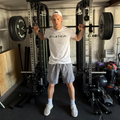




A Power Rack is the most expensive and most important single purchase in most Garage Gyms. Get it wrong and you'll be annoyed for years by wobble, missing expandability or safety flaws. In 2026 there are clear criteria that decide the quality. Here are the 8 most important buying criteria and the mistakes you absolutely need to avoid.

The clear recommendation up front
In 2026, don't buy a Power Rack with a profile smaller than 2.75"x2.75" or a steel thinner than 14-gauge if you're serious about training long term.
Modular systems with a standardized hole pattern (like the Atletica R8 series) are clearly superior to most cheap fixed racks, because they grow with you and hold their value far better.
The 8 most important buying criteria for 2026
1. Profile size and wall thickness (stability)
The single most important criterion.
- Good: 2.75"x2.75" or 3"x3" with 14- to 11-gauge steel
- Very good: 3"x3" in 11-gauge (Atletica R8)
- Weak: 2"x2" or thinner profiles
The thicker and stiffer the profile, the less the rack flexes under heavy squats and the safer it feels.
2. Hole pattern and pin diameter
A standardized hole pattern (usually 2" or 1" center spacing) decides whether attachments will fit.
Westside or tight spacing in the bench zone is a big plus for precise settings.
3. Rack height
- Measure your ceiling height exactly.
- For pull-ups you usually need at least 87–91" of total height.
- In rooms with less than 87" of ceiling height, lower models or half racks are often the better choice.
4. Footprint and floor space
Don't just look at the rack's base area — look at the movement space you need around it. Many people underestimate how much room bench press and deadlifts take up.

5. J-Hooks and Safety Spotter Arms
High-quality, thick-walled J-Hooks and adjustable Safety Spotter Arms are a must. Cheap thin hooks bend or slip.
6. Expandability (modularity)
Can you add a Lat Pulldown, cable cross, dip bar, landmine or weight storage later on?
Modular systems (the R8 in particular) keep their value and grow with your demands.
7. Surface treatment and corrosion protection
Powder coating is the minimum. For outdoor use you need hot-dip galvanizing or stainless steel.
8. Warranty and load ratings
Reputable manufacturers state realistic static and dynamic load values and offer long warranties on the frame (ideally lifetime).
The most common mistakes when buying a Power Rack
|
Mistake |
Why it's a problem |
Better solution |
|
Buying too thin a profile |
Wobbles and feels unsafe |
At least 2.75"x2.75" / 14- to 11-gauge |
|
Looking only at the price |
Expensive follow-up costs because attachments don't exist |
Prioritize modularity and quality |
|
Not measuring ceiling height |
Pull-ups become impossible or the rack doesn't fit |
Measure precisely beforehand |
|
Not planning for Safety Spotter Arms |
Significantly higher injury risk |
Always buy with good safeties |
|
Ignoring the hole pattern |
Attachments won't fit later |
Choose a standardized system |
|
A rack too small for your exercises |
Restricted freedom of movement |
Pick enough interior width and height |
|
A cheap no-name rack with no warranty |
Poor build quality and no support |
Brands with a long frame warranty |
Atletica R7 vs. R8 – the quick decision guide
- R7 series: Excellent value for money, stable enough for most ambitious athletes, a bit cheaper.
- R8 series: Premium stability (3"x3" / 11-gauge), maximum modularity, the better long-term investment and higher load capacity.
For most people who want to train and expand long term, the R8 is the clearly better choice.

Extra tips for buying in 2026
- Plan your attachments in from the start (especially Lat Pulldown and weight storage).
- Check that floor anchoring is possible, even if you don't use it right away.
- Check whether J-Hooks and safeties are included or cost extra.
- Read current user reports on stability under heavy loads (from 350–430 lb).
Frequently asked questions about buying a Power Rack
How much should a good Power Rack cost in 2026?
Solid entry-level models start at around $400–700. High-quality modular systems cost significantly more, but they last a lifetime and can be expanded.
Do I really need a 3"x3" rack?
Not necessarily, but once you're training seriously with heavier loads you'll clearly notice the difference in stability and how safe it feels.
Is a half rack enough?
For many people yes – especially if space is tight. A full Power Rack does offer more safety and exercise variety, though.
Can I upgrade a cheap rack later?
Usually only to a very limited extent. Better to go with a modular system from the start.
How important is the warranty?
Very important. A lifetime frame warranty (like Atletica's) shows the manufacturer stands behind the stability.

Key Takeaways
- Stability (profile size + wall thickness) is the most important criterion.
- Modularity decides the long-term usefulness and value.
- Measure your ceiling height and space exactly before you buy.
- Don't skimp on J-Hooks and Safety Spotter Arms.
- The most common mistakes are profiles that are too thin, no expandability and sloppy space measurement.
- For most ambitious users in 2026, a modular system like the R8 series is the smartest investment.
Your next step
Want to buy a Power Rack you won't regret in two years?
Compare the current Atletica R7 and R8 models against the 8 criteria above. With the lifetime steel warranty and high modularity you're laying a future-proof foundation.
Book a free consultation and have your ideal rack setup, attachments included, planned out.